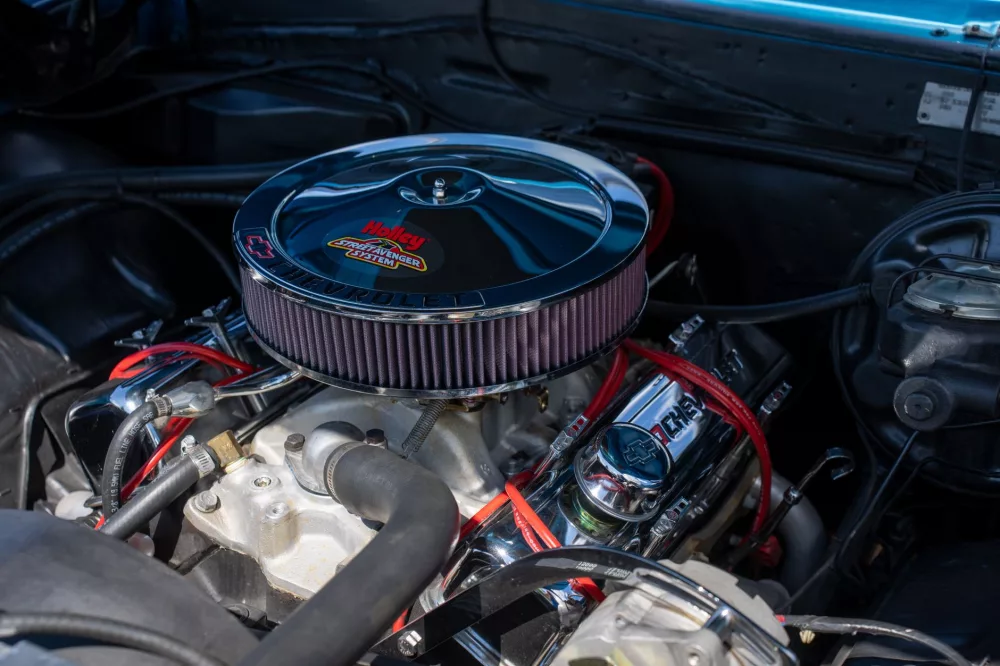
When we talk about the legends of the automotive aftermarket, one name consistently revs up discussions among enthusiasts, mechanics, and racers alike: Holley. For well over a hundred years, this company hasn't just been a participant; it's truly shaped how we think about engine performance, from the simplest street rod to the most sophisticated racing machine. I mean, who hasn't heard of a Holley carb?
The Genesis of a Performance Icon
It all began in 1903. Two brothers, George and Earl Holley, founded the Holley Motor Company in Bradford, Pennsylvania. Their early work wasn't even about carburetors initially; they tinkered with steam engines and even built their own car, the Holley Motorette. But it wasn't long before their focus shifted, landing squarely on the very component that would catapult them to fame: the carburetor. You see, the internal combustion engine was still a relatively new concept for mass production, and making it run reliably and efficiently was a huge challenge. The Holley brothers saw an opportunity there, and boy, did they seize it.
Carburetors: The Heartbeat of Early Engines
Their innovation in carburetor design quickly caught the attention of the burgeoning automotive industry. It wasn't long until they forged a significant relationship with Henry Ford. Can you imagine the scale of that? Holley carburetors became standard equipment on the legendary Ford Model T and later the Model A, meaning millions upon millions of vehicles rolled off assembly lines with a Holley unit feeding their engines. This wasn't just a business deal; it was a foundational moment, establishing Holley's reputation for reliability and quality on an unprecedented scale. They weren't just making parts; they were helping to mobilize a nation.
Years passed, and automotive technology advanced, especially after World War II. The hot-rodding culture exploded, and performance became king. This is where Holley truly cemented its status as a performance powerhouse. Their iconic 4150 and 4160 series four-barrel carburetors became *the* go-to choice for anyone looking to extract more power from their V8 engine. Why were they so popular? Several reasons, I believe:
- Simplicity: They were relatively easy to understand and work on.
- Tunability: Enthusiasts could swap jets, power valves, and adjust floats to dial them in for specific applications.
- Flow Capacity: They could feed some serious horsepower.
- Reliability: They just worked, day in and day out.
You know, back in the day, if you were building a hot rod, a Holley carb was practically a rite of passage. They weren't just parts; they were icons, sitting proudly atop intake manifolds, gleaming in the engine bay.
Beyond the Carburetor: Expansion and Diversification
As engine technology evolved, particularly with the widespread adoption of electronic fuel injection (EFI) in the late 20th century, some might have worried about Holley's future. After all, their name was synonymous with carburetors. But true innovators adapt, and Holley didn't just adapt; they embraced the change head-on. They started developing their own EFI systems, recognizing that the demand for performance wasn't going away, only the methods of achieving it were changing.
What's incredibly impressive is Holley's strategic expansion through acquisitions. They didn't just stick to fuel delivery; they started building a comprehensive empire of performance brands. We've seen them acquire companies that are equally legendary in their own right, including:
- Weiand: Known for intake manifolds and superchargers.
- Hooker Headers: A name that's practically synonymous with performance exhaust.
- NOS (Nitrous Oxide Systems): The go-to for instant horsepower boosts.
- Flowmaster: Delivering that distinctive exhaust note.
- MSD Performance: Ignition systems that fire up champions.
- Accel: Another powerhouse in ignition and fuel systems.
- APR: Catering to the European automotive performance market.
This aggressive but smart strategy transformed Holley from a carburetor company into a true leader in diverse automotive aftermarket segments. It wasn't enough for them to just do carburetors; they had to keep pushing the boundaries across the entire performance spectrum, from induction to exhaust, and from ignition to engine management.
Holley's Indelible Mark on Motorsport and Enthusiast Culture
It's genuinely hard to talk about motorsports without mentioning Holley. Their products have been at the heart of countless victories across various disciplines. From the thunderous roar of NASCAR stock cars to the blistering speeds of NHRA dragsters, Holley components have powered champions for decades. Their tunability and robust nature made them ideal for the brutal demands of racing, where every horsepower counts and reliability is non-negotiable. I think what makes Holley special is how it connects with *us* – the people who live and breathe cars. It’s not just about professional racing; it's also about the weekend warrior, the guy building a killer street machine in his garage, or the off-road adventurer upgrading their truck.
The company has always understood the enthusiast market. They don't just sell parts; they foster a community. Their Holley LS Fest events, for example, have become massive celebrations of performance, bringing together thousands of people who share a common passion for LS-powered vehicles. It's a testament to their deep understanding of what makes car culture tick.
The Modern Holley: Innovation and the Future
Today's Holley looks different than the Holley of 1903, or even 1980. While they still offer a comprehensive line of carburetors for restoration and traditional builds, their focus has heavily shifted towards cutting-edge electronic fuel injection systems. Products like the Holley Sniper EFI and Terminator X systems have democratized modern engine management, making it easier than ever for enthusiasts to ditch their old carburetors for the benefits of EFI – better starting, improved fuel economy, and consistent performance.
They're not just selling parts; they're selling complete performance ecosystems. This includes digital dashboards, wiring solutions, fuel pumps, manifolds, and even safety gear. It's pretty amazing how a company that started with simple brass carburetors can still be leading the charge in high-tech engine management today. They've consistently demonstrated an ability to innovate, adapt, and remain relevant in an ever-changing industry.
Looking ahead, I have no doubt Holley will continue to be a driving force. Their legacy of performance, coupled with a keen eye for future technologies and market trends, ensures they'll remain at the forefront of automotive innovation. Whether it's perfecting traditional V8 performance or exploring new frontiers, Holley's commitment to fueling the passion of automotive enthusiasts appears to be as strong as ever.